LIVEEarly Access since Oct 9, 2026Game v0.1.50.17746Steam reviews Very Positive · 91% (209)Facts checked Oct 11, 2026Patch notes →
NOODLE BOILING & TOPPING PHYSICS · OFFICIAL PRESS MATERIALS

Japanese Ramen Simulator Noodles & Toppings Guide (2026 EA)

Official boil-and-drain flow and physics plating, plus Day 1 Early Access additions — tantanmen, garlic chives, shop levels, and purchase UI fixes — from press coverage and Steam assets only.

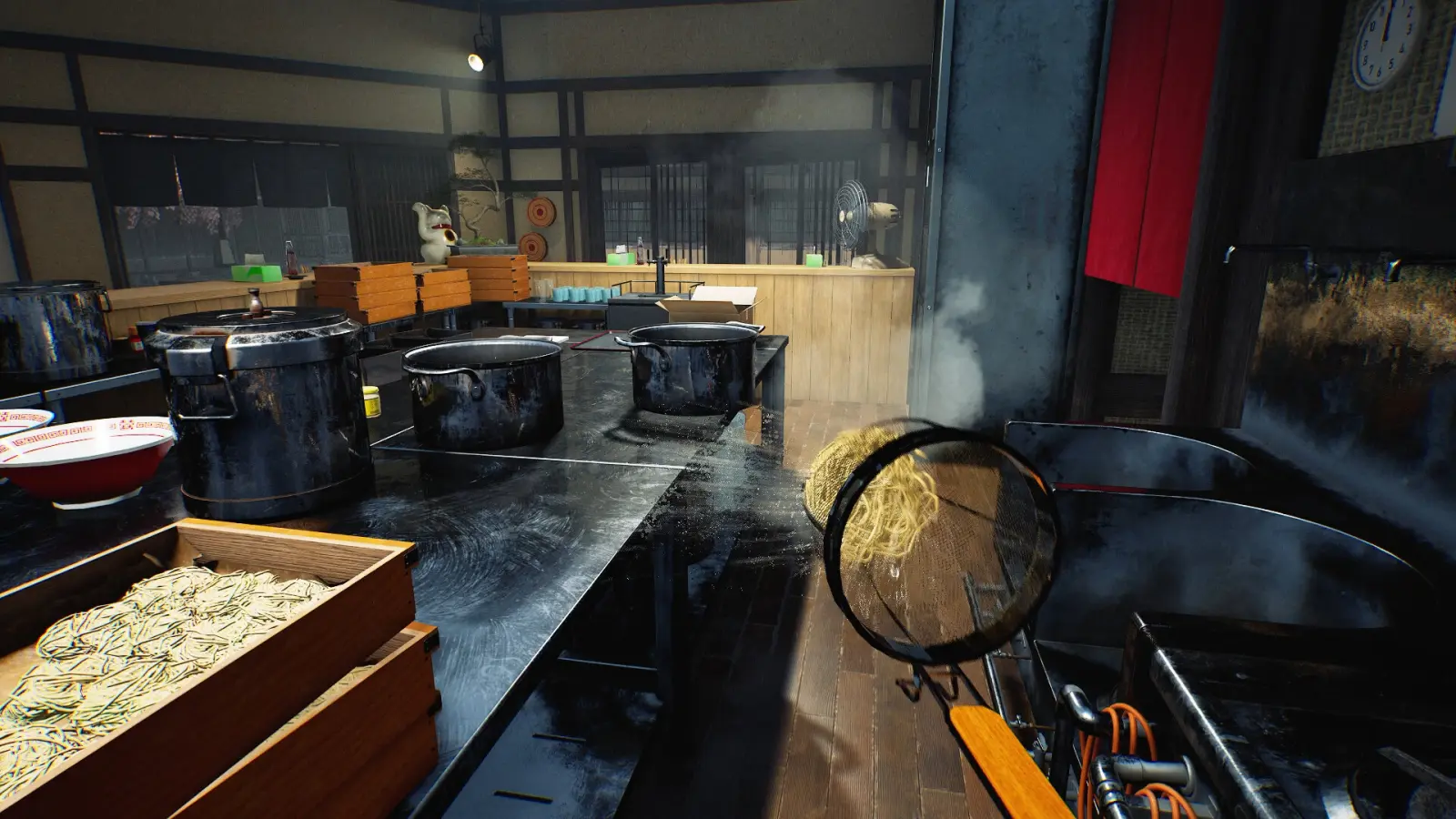
Japanese Ramen Simulator kitchen rendered in first person as a cook lifts a wire mesh strainer of freshly boiled noodles out of a steaming stockpot, with a wooden box of raw portioned noodles waiting on the steel prep counter
📸 Official store screenshot: the whole noodle station in one view — raw noodles in the wooden box, pots on the line, and a mesh strainer lifting the boil with steam still pouring off it.

Day 1 (v0.1.48.17626) — noodles & toppings (official)

Steam Day 1 patch additions and shop-level changes (official notes). OFFICIAL /changelog · /guides/level-unlocks-guide

  • •New ramen: tantanmen — chicken/pork bone orders at shop Lv.26, beef bone at Lv.28.
  • •Buy tantan tare at shop Lv.26.
  • •Garlic chives: buy at Lv.26, chop on the board as a topping.
  • •Bok choy purchase moved Lv.25 → Lv.26; topping orders from Lv.26.
  • •Bonito flakes purchasable from shop Lv.25.
  • •Ramen made with tantan tare only gets dedicated review text (official).
  • •Purchase screen umami/aroma display bug fixed (official).
  • •Cutting boards lock/unlock with right-click; chopping works while locked.

Tantanmen recipe details pending hands-on write-up — no official ratios published yet. Watch /changelog and /recipes.

→ Player FAQ (/guides/player-faq)

Noodles & Toppings at a Glance

The official bowl flowPrep your ingredients (mise en place) → boil the noodles → drain them in a mesh strainer → build the bowl with soup and toppings placed physically → your signature bowl is ready.

3 Things to Know Before You Boil

POINT 1

Toppings are physics objects. The official Steam description confirms you place every topping physically — official screenshots show piles stacked so high they overflow the bowl rim and still stand.

POINT 2

No official numbers yet. Wild Dog has not published boiling times, water temperatures, or topping counts — anything beyond the official flow and screenshots would be guesswork, so this page skips it.

POINT 3

Built for co-op. The shop runs 1–6 players online, and the noodle pot is a natural solo station — one pair of hands owns the strainer while teammates plate and serve.

Sources: Official Press Coverage & Store Assets

Early Access live since 2026-10-09 (v0.1.50.17746). The five-step walkthrough uses 4Gamer coverage and store screenshots — pre-launch press observation; in-game UI may differ. Prefer the Day 1 section above for new ingredients. OBSERVED

From Raw Noodles to a Finished Bowl in 5 Steps OBSERVED

In Japanese Ramen Simulator, boiling noodles ends with the drain step: a wire mesh strainer full of freshly cooked noodles lifted over a steaming pot on the kitchen line with steam pouring off the boil
STEP 01

Step 1: Boil the Noodles and Drain in the Mesh Strainer

The 4Gamer preview lays out the official flow as mise en place → boil the noodles → plate the toppings → finish the bowl. Grab a portion of raw noodles from the wooden box, drop them into the boiling pot, and lift them out with the wire mesh strainer to drain. Steam pours off the pot in the official screenshot — the boil stays live, so keep the noodle station moving during service. In co-op, give the strainer one owner so every bowl hits the counter on the same clock.

📸 First person over the noodle station: strainer up, steam everywhere, and the next portions sitting in the wooden box right on the counter.
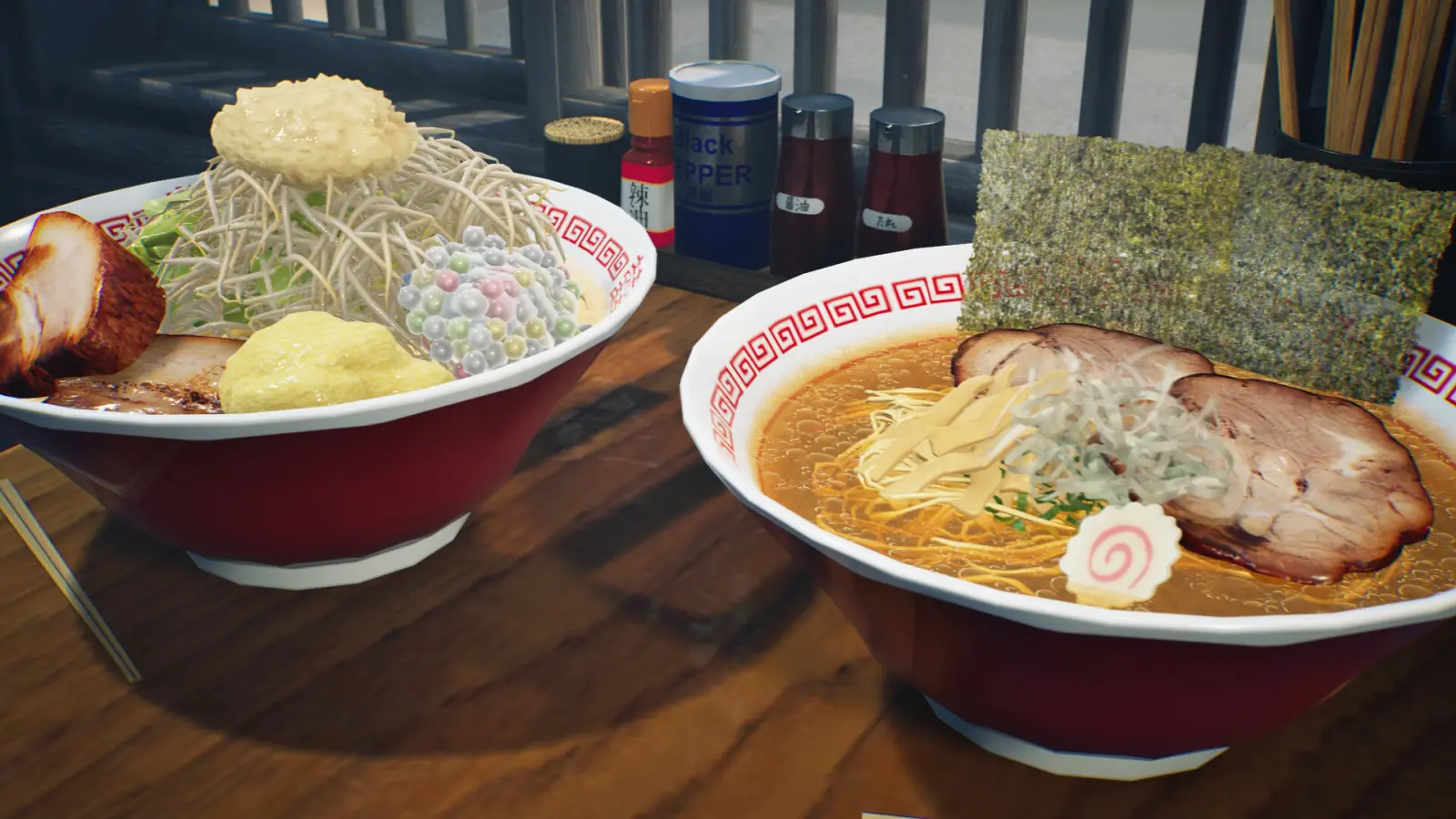
Two finished bowls from Japanese Ramen Simulator sit side by side on a wooden counter, a golden soy-sauce broth bowl with chashu seasoned egg halves and standing nori next to a bowl buried under a tall mountain of bean sprouts
STEP 02

Step 2: Warm Bowl, Soup Base, Noodles In

Mise en place comes first in the official flow — your soup bases and tare are prepared before service, not during a rush. The official screenshot shows two finished bowls side by side: a golden soy-sauce broth carrying chashu, seasoned egg halves, shredded topping and a standing sheet of nori, next to a bowl buried under a bean-sprout mountain. Same kitchen, same bowls — the base you prepared in advance decides each bowl’s direction before any topping lands. Chopping and tray staging: /guides/prep-station-guide.

📸 One counter, two directions: a clean shoyu bowl with nori and egg halves versus the sprout-mountain school.
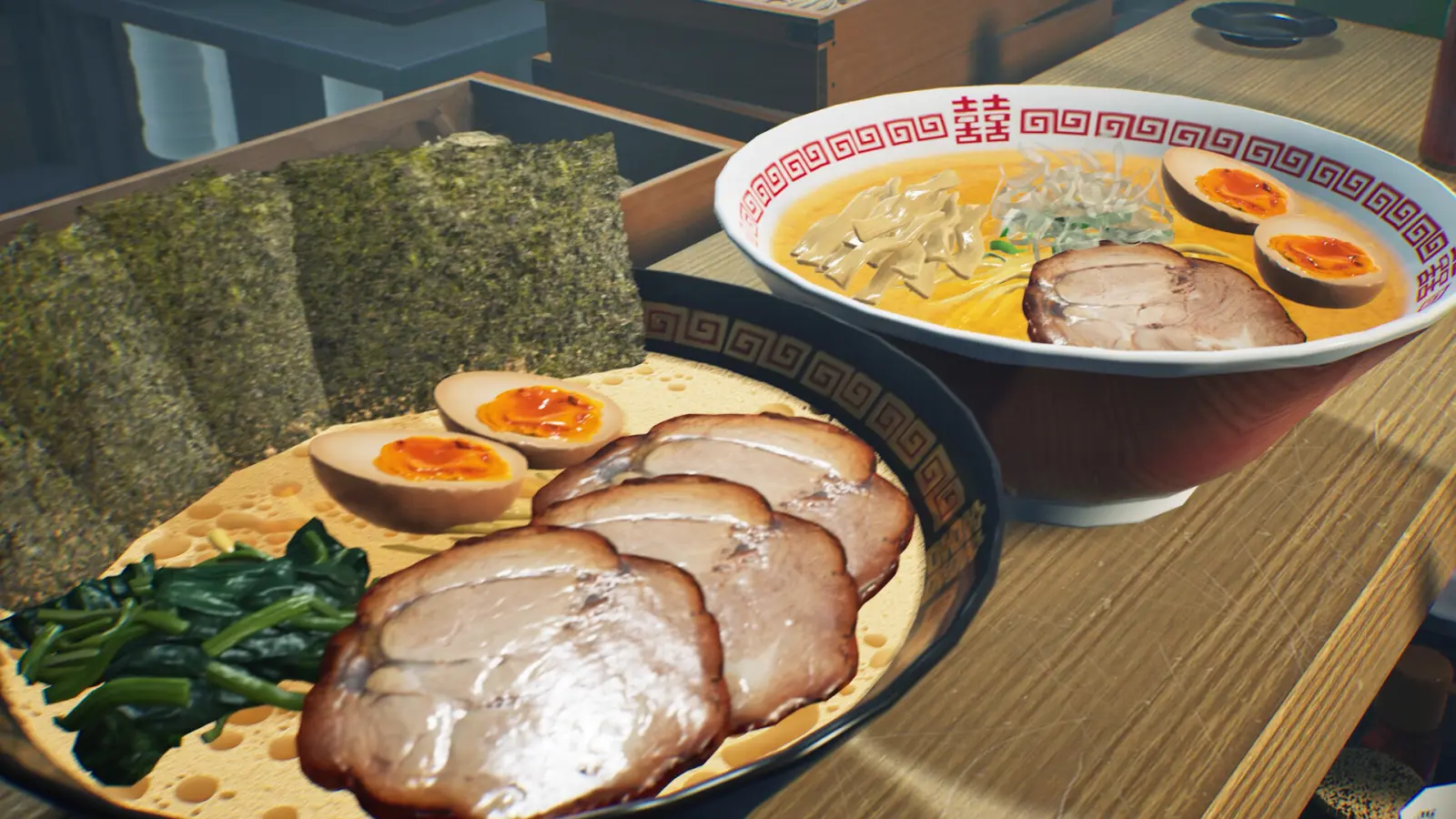
A close-up bowl in Japanese Ramen Simulator shows tidy physical topping placement: fanned chashu slices, a bundled portion of spinach, and halved soft-boiled eggs each holding their own zone on the noodle bed
STEP 03

Step 3: Physical Placement — the Basics

The Steam description confirms toppings are placed physically, and the close-up shows what tidy placement looks like: chashu slices fanned across the noodle bed, spinach laid in a bundle, seasoned egg halves set cut-side up, each topping holding its own zone. Because every piece is a placed object rather than a floating icon, where you drop it is where it stays — a neat bowl reads professional before the customer ever lifts a chopstick.

📸 The basic plating pattern from the official screenshots: fan the chashu, bundle the greens, park the egg halves cut-side up.
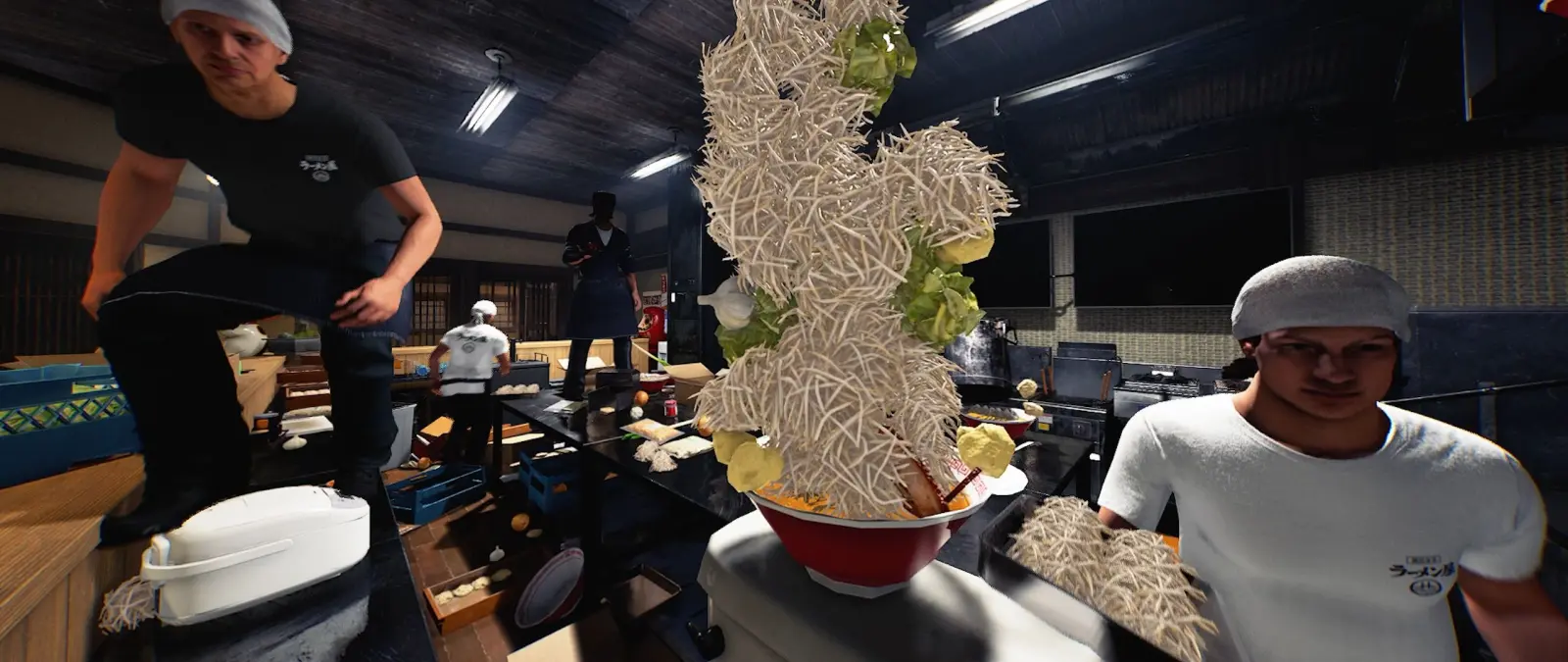
Japanese Ramen Simulator topping physics at full stretch as the crew stacks bean sprouts and greens into a towering column far above the bowl rim, holding its shape while four staff work the shop kitchen around it
STEP 04

Step 4: Advanced — Stack for Portion and Theater

Physics placement cuts both ways: nothing stops you from keeping the stack going. The official screenshot shows sprouts and greens piled into a full tower that rises far above the bowl rim and still stands, held up by the same physics that keeps a neat bowl tidy. Go tall when a customer clearly wants volume — but the stack is real: overreach and the pile can slump past the rim and across the counter.

📸 The extreme build from the official screenshot: a sprout-and-greens tower standing on physics alone, with the whole crew watching it hold.
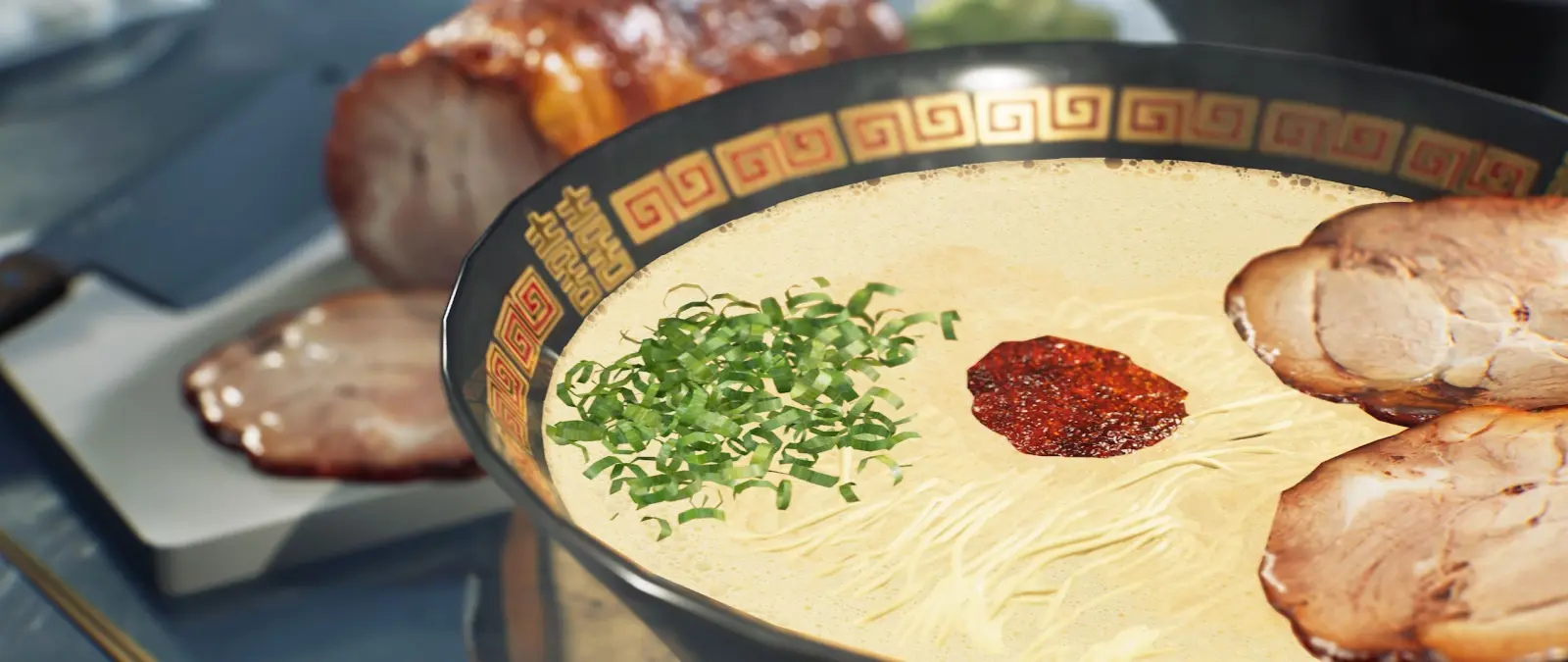
The final bowl check in Japanese Ramen Simulator, a pool of red chili paste and a heap of chopped scallion resting beside chashu slices in pale broth while the rolled roast waits on the cutting board behind
STEP 05

Step 5: The Final Check — Your Signature Bowl

The official flow ends on "your signature bowl" — one last look before the bowl leaves the counter. The close-up shows the finishing layer doing its job: a pool of red chili paste at the center, a heap of chopped scallion, chashu slices riding the broth, with the rolled roast still on the cutting board behind. Check the bowl against what you intended to build — toppings placed, stack standing, broth level right — then send it.

📸 Last look before the pass: chili, scallion, chashu — everything placed where you meant it to be.

Noodle Texture × Broth Temperature × Serve Time — the Three Lines the Official Copy Tells You to Watch

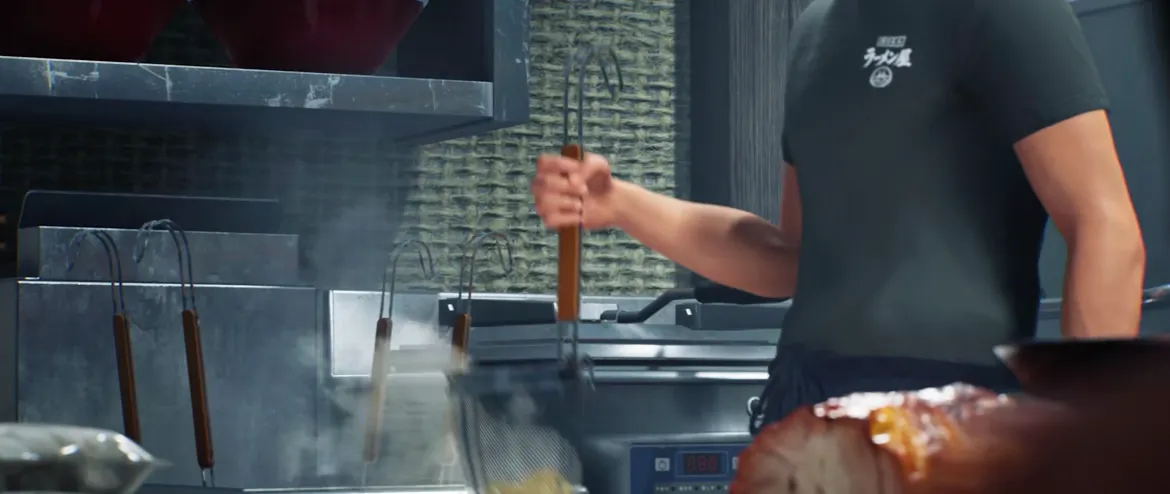
The Steam description says it outright: "Keep an eye on noodle texture and broth temperature, as well as the aroma and Umami and the time it takes to serve each order." A bowl is judged on three axes — noodles, broth, and speed. The official in-engine store clip also shows a staff member lifting a mesh noodle basket out of a steaming pot (image below). Exact doneness numbers are still unpublished; we update after hands-on checks in Early Access. OBSERVED

Japanese Ramen Simulator kitchen staff lifting a mesh noodle basket full of cooked noodles out of a steaming broth pot in the official store gameplay clip

📸 From the official clip: a noodle basket coming out of the steaming pot — doneness is decided in these few seconds.

★ Precise judgment systems for texture, broth temperature, aroma/umami, and serve time are unpublished. Post-v0.1.50.17746 hands-on updates go via /changelog.

Noodles & Toppings: Frequently Asked Questions

Q1.How do noodles work in Japanese Ramen Simulator?

Noodles follow the second step of the official flow published by 4Gamer: mise en place (ingredient prep) → boil the noodles → plate the toppings → finish your bowl. Official screenshots show raw noodles stored in wooden boxes and cooked portions lifted out in a wire mesh strainer over a steaming pot. The developer has not published boiling times or doneness mechanics, so treat any exact numbers you see elsewhere as unconfirmed.

Q2.Can toppings physically stack in Japanese Ramen Simulator?

Yes. The official Steam description confirms physical topping placement, and an official screenshot is the proof: bean sprouts and greens stacked into a tower that rises well above the bowl rim and still stands. Stacking is real physics, not a decorative counter — pile too high and it can spill past the rim onto the counter.

Q3.How many topping types are in the game?

Wild Dog advertises variety without an exact count. Day 1 (official) added garlic chives and tantanmen-related items. Screenshots commonly show chashu, seasoned egg, bean sprouts, spinach, scallion, nori, narutomaki, chili paste. See /ingredients and /changelog.

Q4.Can you control noodle texture and broth temperature?

Yes — the Steam description names them as watch axes; numeric judgment systems are unpublished. How to read topping lines on Order Slips (separate from noodle physics): /guides/customer-orders-guide. See also /guides/player-faq.

Q5.When can I make tantanmen? What is the recipe?

Day 1 (official): tantan tare at Lv.26; tantanmen orders at Lv.26 (chicken/pork bone) and Lv.28 (beef bone). Recipe details pending hands-on write-up — /guides/level-unlocks-guide and /changelog.

Q6.Is Japanese Ramen Simulator out yet?

Yes — Steam Early Access since 2026-10-09 (v0.1.50.17746). Track /changelog and /guides/player-faq.

Q7.Can you play with friends?

Yes — online co-op for 1 to 6 players running one ramen shop. Noodle boiling and topping plating split naturally between players: one pair of hands on the strainer, teammates building bowls and working the counter.

Q8.Where do I find recipe numbers (broth ratios, toppings per bowl)?

In-game recipe numbers are not officially published. Use /recipes and /ingredients as indexes; tantanmen ratios pending hands-on testing.